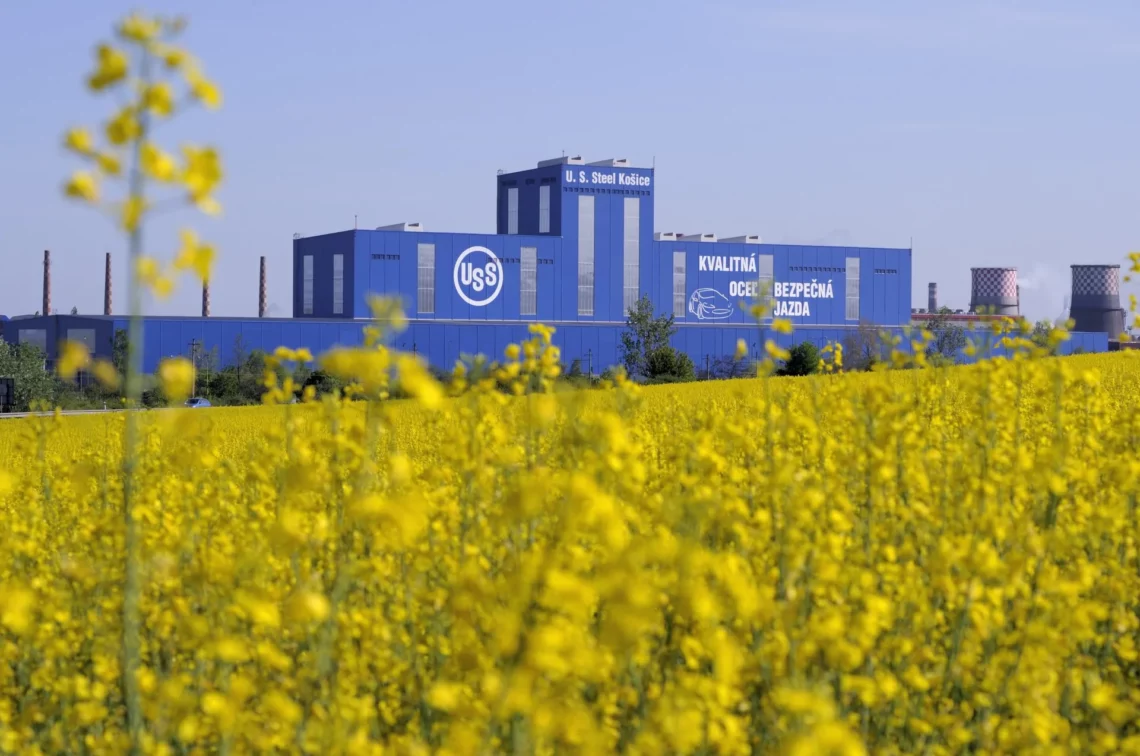
U. S. Steel Košice disappears from the steel industry map
As of 1 October 2026, U. S. Steel Košice will disappear from the map of the European steel industry.
This does not, however, mean the end of steel production in Košice. Quite the opposite. One of Central Europe’s largest mills is about to begin a new chapter in its history under the name of NIPPON STEEL SLOVAKIA.
The name change may look like an ordinary rebranding resulting from the ownership changes, but in this case, it is much more than that.
For more than a quarter of a century, the name U. S. Steel Košice has been part of the industrial identity of eastern Slovakia and Europe. For thousands of employees, their families, suppliers and companies working with the mill, it has been more than just a corporate name. It has represented a workplace, a chapter in people’s professional lives and a symbol of one of the most important foreign investments in Slovak industry after the country’s political and economic transformation.
The American chapter began in 2000, when U.S. Steel acquired the mill assets from VSŽ (Východoslovenské železiarne). Now, more than 25 years later, the familiar name is disappearing. It will be replaced by NIPPON STEEL SLOVAKIA.
The changes go far beyond a new logo on the mill gate
€900 million for a new chapter
Just a few weeks before the name change, one of the most significant investment decisions concerning the Košice mill in years was made.
U. S. Steel Košice approved the construction of an electric arc furnace (EAF) with an annual production capacity of approximately 1.6 million tonnes of steel, together with a new air separation unit. The total value of the project is approximately €900 million. Production from the new EAF is expected to begin in 2030, while the ASU is scheduled to be operational a year earlier.
The project will receive substantial public funding. The Slovak government has signed agreements covering approximately €350 million in financing from the EU Modernisation Fund – around €310 million for the EAF and €40 million for the ASU. This means that public funding accounts for nearly 39% of the declared investment value.
The new EAF is expected to operate alongside the existing blast furnace infrastructure. This hybrid model will allow the steelworks to maintain greater production flexibility while gradually reducing CO₂ emissions. Nippon Steel plans to operate both technologies in parallel.
It is worth remembering that Košice is a strategic location for the Japanese steelmaker Nippon Steel. The city is home to an integrated steelmaking facility, while the company also has a solid customer base at the heart of the European market.
The European Steel Industry Problem
The official announcement issued by U. S. Steel Košice also includes a very important point that is closely linked to our recent articles.
U. S. Steel Košice states that it expects Europe to create conditions that protect the market for local producers investing heavily in modern decarbonisation technologies.
It would be difficult to find a clearer expression of the challenge the European steel industry is currently facing.
Europe can spend billions of euros modernising steel mills, building electric furnaces and reducing emissions. None of these investments, however, will make economic sense if European steelmakers continue to lose market share to imports from countries whose producers do not bear comparable transformation costs.
Old habits are stronger than rebranding
It is somehow unfortunate that the market was not consulted about the name change and that “Košice” was not retained in the new name. The European steel market is not exactly full of young professionals (no offence), and long-established habits tend to change slowly. People who have spent the past quarter of a century buying steel from or working with U. S. Steel Košice may need a little more time than the marketing department to get used to the new name. It is therefore reasonable to suspect that, for many years to come, NIPPON STEEL SLOVAKIA will still require a brief clarification in business conversations: “the former U. S. Steel Košice”.
Perhaps the new Japanese chapter will also bring some fresh energy and attract a new generation to the European steel industry.
Decarbonisation is also discussed in our other articles:


You May Also Like
Steel Under Protection, Industry Under Pressure…
GREEN STEAL – High-Risk Investments